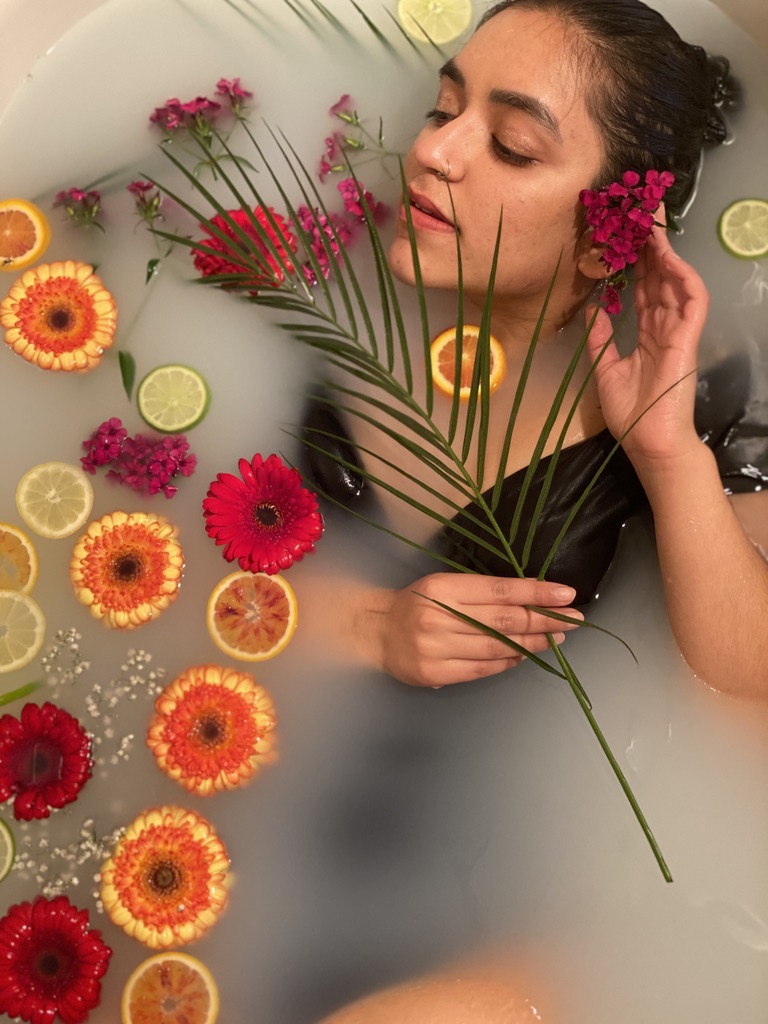
We Rise

By Kat Terban

The Thursday that should have been

Thanksgiving became a visceral dash

to rekindle the torch of Liberty. We

did not go quietly. We danced in the streets

on the political graves of the ones who

wanted us to lay down and die to line

their pockets and protect their secrets.


We melted down ill-wrought bronze

men, tore them from the ground, painted

over their collective pedestals with Freedom’s

words. We did not go quietly. We shoved

shoulders together, toppled the violent

machinations of the ones who wanted us

to cry in fear and submit to terror.


We blew back the gas they tried to choke

us with on nights we walked masked

shouting our demand to be treated

as human beings, Equal and worthy

regardless of circumstance. We did not

go quietly. We fed each other words

that sparked action and linked arms

protecting who and what we hold most dear.


We give thanks to the ones who fed us

and tended our wounds. We give thanks

to the ones who recognized our need to be

seen and regarded as whole persons

deserving better than enslavement and death.

We give thanks to the ones who broke blue lines,

put down their arms and walked away

from corruption to take up signs and outrage.

We give thanks to the ones who stood up

with cameras, who were less-lethally maimed

and battered, and witnessed roiling camouflaged

terrorists barking with uncovered mouths and

uncovered muzzles trying to silence dissent.


Do not go quietly. Rise. Say our names.


Author:

Kat Terban (they/them) watches cheesy movies with friends, likes to play with their words, and invites fantastical creatures to solve mysteries and drink tea. They live atop a hill, in a land of moss, clover, and roses, where songbirds greet them every morning and cats purr them to sleep every night. Follow them on Twitter @semiotic_pirate.


This piece is a part of DISTANCED 3.0.

I’ve been doing at-home photoshoots to cope with quarantine – and that’s OK

By Aleenah Ansari

Photographs by Liezel Villanueva

Time is in abundance these days. I think that’s a good thing, but I’ve also discovered that work expands to fill the time you have. This means that my adventures in full-time working from home haven’t been as productive as I’d like. With everything going on in the world, I’ve been trying to figure out how to spend my time in my little Seattle apartment, which has turned into my office for the foreseeable future.

aleenah 3

As a writer in tech, my days are full of interviews, writing, editing, photography for my stories, and content management. I’m still doing all of this but from the safety of home. I jump from meeting to meeting about how we can write stories that customers need. How can we support remote work? What tools do people need for effective collaboration? How can we adapt to keep data secure? These are questions we’re exploring on a daily basis amid COVID-19. Instead of scoping out photoshoot locations at Microsoft, I take screenshots over Microsoft Teams or guide their loved ones through the process of doing an at-home photoshoot.

Although I didn’t miss my two-hour bus commute to work, I was experiencing digital burnout. In a world that was always trying to get my attention with headlines, emails, and notifications, it was challenging to stay focused while going from document to document, call to call.  I found myself missing the micro-interactions of running into co-workers in the hallway or on the bus and learning more about what they’re working on. These are the moments that energized me to check out a new event or try a new approach for one of my stories. Fundamentally, everyone, whether introverted or extroverted, wants to feel connected.

aleenah 2I quickly realized that I needed an outlet to be creative outside of my work. Amid quarantine, I’ve learned a few things about what inspires me. While scrolling on my Instagram feed, I discovered a few content creators who were turning everyday objects into props for indoor photoshoots. It was clear that they were keeping novelty alive, all from the comfort of their homes. I had a few flower bouquets of my own and an apartment with windows that overlook the street, and the sun streams in on occasion. My home became the set for all of my at-home photoshoots. Bedsheets turned into backdrops, iPhones turned into professional shooting equipment, flowers and milk from Trader Joe’s created an ethereal photoshoot in the bathtub, and my Christmas lights from last year transformed me into a space queen.

aleenah 1

Amid all the uncertainty of the world, these photoshoots gave me something to look forward to every week.  I’m learning to define creativity in a way that’s expansive and interdisciplinary. It was also a way for me to play creative director and come up with a concept that brings together color, styling, and props into a cohesive photo that tells a story. In the process of sharing my photos on social media, I found that others were excited about the photos and looked forward to future posts.

Everyone has ways of coping with quarantine. I still attend all of my meetings and carve out time to read the headlines, but it’s equally important to find a release that supports my mental health. It could be scheduling regular calls with friends, picking up a new hobby, making banana bread for the third time that month, or watching whatever Netflix show is going viral this week (looking at you, Tiger King). And if all you’re able to do is take things one day at a time, that’s OK too.


Author:

Aleenah Ansari (she/her) is a journalist at heart who works at the intersection of technology, education, and storytelling. Her identity as a queer, Pakistani woman empowers her to tell stories about communities of color that are committed to lift as they climb, and she hopes to inspire the next generation of designers, writers, and makers by making them feel represented in the stories she writes. Follow her on Instagram @aleenahansari.

Photographer:

Liezel Villanueva is a sonographer who studied diagnostic ultrasound at Seattle University, but she also loves doing photoshoots as an outlet for creativity. You can usually find her watching YouTube, eating Molly Moons ice cream, or playing Animal Crossing.


This piece is a part of DISTANCED 3.0.

Behind My Walls

By Diana Raab

You can’t imagine

how I bite my cuticles

at home in the dark,

nibble chocolate in my closet,

nursing a chardonnay.


You couldn’t know

I collect rare crystals

and antique typewriters.


You might not notice

the creases in my face,

or how difficult it is for me

to talk about sex.


These days, all I can do

is write dark poems

in the journal at my bedside,

and slip holistic herbs

under my tongue.


Take me out of my misery.


Artist:

Diana Raab, PhD, is an award-winning memoirist, poet, blogger, speaker, and author of 10 books and over 1000 articles and poems. Her two latest books are, “Writing for Bliss: A Seven-Step Plan for Telling Your Story and Transforming Your Life,” and “Writing for Bliss: A Companion Journal.” Follow them on Twitter @dianaraab and Instagram @dianaraab.


This piece is a part of DISTANCED 3.0.

when I say “okay” when someone asks me how it feels to be back

By Rodlyn-mae Banting

what i am trying to say is that i am happy here, where my feet are relearning rootedness, digging so firmly into the ground that it manifests in an ingrown toenail, and all my skin dead and alive merges into one until i am the carpet, until i am the hairball dried into that carpet, until i am the lemon zest blistering out of a cheese grater, until i am pulsing, no, bursting, because i cannot hold it any longer in
the small cave that is my mouth, this thing that tastes like happiness, because i feel alive again while the world outside is rotting and so it comes out of me as pus. it is 3am and jarek and i are contemplating the origins of yeast because we think it is something ancient, is it mold or is it bacteria and why the hell are white people so obsessed with it? we are laughing in that coded way that we are used to, like when i met his mom and whispered his dead name like a prayer in case i might need it, a hidden weapon underneath my tongue like it might offer me protection even though i never knew him like that, only ever knew him for what is ancient inside of him and there is nothing more ancient than december. in the shower i shave my pussy not because anyone else will see but so that i can see a mound, my mound, that budding mountain that be, the highest point i’ll reach for a while right between my legs & believe me when i say that the view is wilding. i let out a scream reserved for the brown girls so that i can hear it bounce right back at me, so that i can hear it again and again and feel less alone, hear it echo in this soil that we so foolishly mispronounced as dirt, burying my breath beneath the myth that in order to find yourself, you must stray far away from home.


Author:

Rodlyn-mae Banting (she/her) is a Filipina feminist educator, poet, and cat lover born and raised in New York. She is a Masters candidate in the University of Wisconsin-Madison’s Gender & Women’s Studies and co-hosts the podcast The Brown Girls’ Journal. Her words can be found/are forthcoming in Friktion and Marias at Sampaguitas. Find her on Twitter @fmnstmelodrama.


This piece is a part of DISTANCED 3.0.

Venturing Out

By Mickki Garrity

The clock said 8:14. She had to leave now if she wanted to get to the train station on time. Not that they took the trains anymore. The trains, like most ways of getting around, had been shut down months ago. But the train stations that connected the region through the underground arteries of the city were still the best landmarks that anyone could find. And so that’s where they agreed to make the exchange.

She worried that picking up at the train station would be too simple; not safe. What if there were cameras?  She assumed there were cameras, but she doubted that anyone was reviewing them anymore. Still, she was nervous. Always nervous.

Pushing her arms into a rain jacket, she checked the mirror. The stocking cap covered her hair and ears, and much of her forehead. The cloth mask she wore over her mouth and nose and chin meant that the only part of her face still visible were her eyes. She covered these in swimming goggles that had belonged to her sister Raina, from when they still went swimming. It wasn’t very cold out yet, but the stocking cap helped keep her hair down and made her feel a little more protected. Not that it would protect her from the virus. But maybe it would keep people from looking at her for too long.

She pulled on the long yellow gloves that were the only gloves they had anymore. With her hair tied back, she used to wear them when cleaning the bathroom. They protected her fingernails from the harsh chemicals and meant that she could scrub the bottom of the tub without ruining her nail job. Now they were precious, carefully disinfected and hung to dry anytime they ventured out of the confines of the apartment.

Down four floors she went, pushing the heavy glass door out to the street and the evening sun. Without pausing, she turned right, and began walking quickly toward the train station. She focused downward, but not too downward, keeping a soft eye on the few people who were also on the sidewalk. They were each bundled in their own handmade gear; focused on a spot just ahead of their feet; walking quickly to their destinations.

The city had been filled with people who were used to walking quickly to where they needed to go. But before, it had also been filled with cars honking with impatience and the lilt of the Dominicans on the corner and the bell at the door of the bodega on the first floor and loud music from windows overhead. And laughter. She hadn’t realized before how much people around her would be laughing, even in what seemed to be the worst of times. It was worse now.

Three more blocks. Her feet felt numb as they hit the pavement. Thump, thump, thump, thump. She had lost track of the people in front of her; thinking for a moment about the before-times. I shouldn’t do that, she thought, and focused again to ensure she wouldn’t get too close to anyone. She passed a man in a brown trench coat. He wore a dirty mask over his otherwise naked face and his eyes, cloudy from cataracts, were also red from too much gin and she worried for a moment as he wobbled a bit on his feet, but she can’t get too close and so she looked away, putting more space between them as she held her breath without realizing it and didn’t start breathing again until there was at least half a block between her and the man.

Her feet paused at the top of the stairs going down into the train station. It’s dark down below except for a flickering light that’s buzzing loudly. She hesitates; she never liked going into train stations before, but it always felt a little better then, because at least she was surrounded by other people, most of them minding their own business except for the occasional morons who would comment on her ass as if they were reciting poetry. As obnoxious as they were, she wished then for one of them now to keep her company, if only from a distance.

Gritting her teeth, she hurried down the stairs, two at a time, her boots echoing sharply. Tap tap, tap tap, tap tap. Under the buzzing light, she quickly took a left turn, avoiding the turnstile and the pile of garbage being ransacked by a gang of rats. More reason to hate the subway; she shuddered and pressed on, looking for the maintenance closet where the package should be waiting.

She pushed open the door with an elbow, heart thumping; it’s too dark. She wished she had thought to bring a headlamp, but batteries are scarce these days, and she needed to find a way to get some more. Maybe she’ll ask this guy, but she doesn’t want to ask for too much so she pushed the thought aside and peered into the darkness of the closet.

Her blood pounds loudly in her ears, but she sees it there, left on top of the box like last time. She stepped around tipped over cans, careful to avoid a few needles. She dropped the bundle of cash pulled from her pocket and grabbed the package, wrapped in brown paper and the size of a pack of cigarettes. It was all the cash they had left. She remembers cigarettes, then, and how they made her lips tingle; what a thing to think of now, and turned quickly to leave this dark place. Running up the stairs, she feels slightly sheepish about how afraid of the rats she is, but she’s just glad to be going toward the sun and away from the musty closet.

At the top of the stairs is the man with the brown trench coat, staring down at her. She’d been holding the package in one hand, but at the sight of him she clutches it close to her chest with her yellow cleaning glove. “What do you got there, missy?” he says to her, slurring his sss.

“Nothing,” she says, moving away from the man.

“Liar!” he snarled, reaching out a bare hand and brushing against her shoulder. She nearly stumbled as she turned on one heel and sprinted away from the station, the man swearing behind her.

Heart thumping, her back drenched in sweat, she headed toward home without slowing down. Long shadows were snaking their way through the street and she knew the sun would be down soon. They used to send police cars around the neighborhoods at this time, telling people through the loud speaker that curfew was in effect, and compressing the city into daylight-only. But now, none of those people are left. The few who remained make their own curfews, first because of the burning, and now because they’re all just too tired.

Her feet find home. There are more stairs to be climbed, and she slams the door behind her. She catches her breath while leaning against the door, still seeing the man’s hungry eyes. She strips off the gloves and takes off all of the protective gear, piece by piece, as if they were entirely covered in virus. Stepping all the way out of her clothes, she heads for the bathroom and takes a brief shower. The water is still running, but it’s freezing cold all the time now. Shivering, she pulls on sweatpants and a sweatshirt from her alma mater. Does that even matter now? She unwraps the brown paper from the package and looks inside. There are two vials, along with a few new syringes. Only two. She squeezes her eyes together, trying to hold back a sob. This won’t even last a month.

Taking a big breath, she presses her eyes with the backs of her hands. The blood is pounding in her ears again. Shaking her head, she picks up the vials and carries them into the next room.

Alisha looks up as she steps through the door. “Did you get them?” she asks, cradling the baby in one arm while the toddler pushes a book at her face, grunting a little through his binkie.

“I did,” she says, bending over to pick up Galen and readjusting his binkie.

“How many did we get this time?” asks Alisha, pushing a strand of hair behind her ear with her free hand.

“We’ll be good for a while,” she replies, bouncing Galen on her hip, not looking at her wife.

“Really?” says Alisha, “Oh, I was so worried.” She exhales loudly and cradles the baby closer to her chest. Alisha’s diabetes had been manageable before all of this, but now the insulin supply had broken down, like everything else.

She blinked back tears. I will find more, somehow. “It looks like you’ve had your hands full while I was gone,” she says, nodding toward their children.

 At this, Alisha throws her head back and laughs.

She closes her eyes a moment. God, I love that laugh


Author:

Mickki Garrity (she/her) is enrolled in the Citizen Potawatomi Nation and lives on the North Coast of Oregon, spending her free time walking in the woods and puttering in the kitchen. She’s written local interest stories for Denver’s Washington Park Profile and is newly venturing into the world of fiction-writing.


This piece is a part of DISTANCED 3.0.
quiet writes an ode to scream

By Swethlana Saraswat

you are ruby lip gaping wide open for the universe to settle in/ i am the gatekeeping father who lies that you are not home/ you are the slimy tongue that spits out hurt and anger like a reverse jukebox/i am the time that made your kind irrelevant/ you are the dragon lady gasping for air after howling out the last fire-strands of wroth/ i am the boiling blood/ you are the whistle of a pressure cooker/ i am the whisper that comes before/ you are the unattended milk that climbs out of the pot/ i am the stirring spoon that stops you from falling apart/  

you are red gowns and bloody gums, dirty knives forgotten in a crime scene, hot oxygen-deficient air, noise begging for permission to burst, primal riot against all evolutionary common sense, hunted down-crabs walking away from a grimy bucket/

i mean that you are beautiful/short skirts and sneakers, cheer captain and can play an instrument with the bleachers/ i admire you/ i respect you/ i mourn you/ i thank you/ everyday/ for your sacrifice/ you are the reason/ why i’m still alive.


Author:

Swethlana Saraswat (she/her) has written for multiple companies and college professors. Her work has been featured in performance poetry events, Ayaskala Literary Magazine, and in a poetry anthology published by Half-Baked Beans. She dreams full time and cries at Panda videos. Find her on Instagram @letters_by_lana.


This piece is a part of DISTANCED 3.0.
Spring to Fall 2020

By Ann Marie Sekeres


Artist:

A long time ago, Ann Marie Sekeres (she/her) went to art school and learned to paint. She showed a bit around New York in the 90s. She didn’t get where she wanted to be, but eventually became a very happy museum and nonprofit publicity director and started a family. She found out about the Procreate drawing app from an illustrator she hired, stole her kid’s iPad and has been drawing every day since. Follow her work at @annmarieprojects on Instagram.


This piece is a part of DISTANCED 3.0.
You Do Not Approve Of My Out Of Office

By Claire Sosienski Smith

I say they no longer exist in the waking dream

of quarantine. Still, I change my automated message

to on annual leave, back on the 22nd, stay safe!


The only punctuation: commas and one singular

exclamation point, sticking out from my sentence

like the offshore windfarm’s red lights


blinking in the distance as I walk along the shore.

The sun dissolves entirely into the sea, which recoils

black and squat against the salty horizon.


Across the Atlantic, there is a boy with a shaved head,

nails trimmed short, riding his bike across town

face half covered with a homemade mask


beneath a sun that has yet to set. Sent my letter today,

this song reminded me of you. I return phone to pocket

and to a night marooned in the middle of a single bed.


Author:

Claire Sosienski Smith (she/her) is based in London and spends a lot of time thinking about poetry and prison abolition. Find her on Twitter @CLAIRESOS and Instagram @cyberwitch1996.


This piece is a part of DISTANCED 3.0.

The Chaos Of Distance

By Praise Osawaru

My father barges into my room in the dead of night & says:

Are you sleeping? He sees my eyes, then realizes that slumber has no grip on me.


In his face, I see the calmness of a manatee. He sails warily to & fro in the space 

before my bed, & in his snail’s pace, I feel a frisson of forlornness. The fan is at


its lowest yet my body shivers. A recorder goes off in my head & his voice animates:

Do you know it’s past midnight & you’re still watching a movie? It’s not the


first time, so when he halts & sighs, I hold my breath & brace myself.

So if this pandemic doesn’t end, your mom will remain two countries away?


Nothing dominates my mind, except the image a man, taciturn in bed, pillow clutched to

his chest. He should be sitting on the sofa, his wife’s head quiescent on his lap, both watching


re-runs of The Johnsons. I say: I pray it ends soon. For a few seconds, I hear only my

thumping heart, the sound of oxygen covertly slipping into my lungs & the fan’s blade


slicing through the air. & when his eyes flicker, I read that as: I pray so, too.

He exits my room & I am by myself, hearing his footsteps recede down the corridor.


Author:

Praise Osawaru (he/him) is a writer and (performance) poet of Bini descent. He’s a Best of the Net nominee with works appearing/forthcoming in Blue Marble Review, FERAL, Ghost Heart Literary Journal, Kalahari Review, Serotonin, Sub-Saharan Magazine, and elsewhere. He was longlisted for Babishai 2020 Haiku Award and shortlisted for the Nigerian Students Poetry Prize 2020. Find him on Instagram @wordsmithpraise and Twitter @wordsmithpraise.


This piece is a part of DISTANCED 3.0.

High-five

By Prachi Valechha

Artist:

Prachi Valechha (she/her) is a freelance cartoonist and animator from India. She makes art that she wants to live in and her art makes her feel like a powerful god. Follow her on Instagram @rainbowteeth.


This piece is a part of DISTANCED 3.0.